You Won't Believe What Rotterdam Hides on the Waterfront
Rotterdam doesn’t play by the rules of typical European cities—no cobblestones, no old-town clichés, just bold architecture and canals that make you stop and stare. I went looking for quiet views and found something way more exciting: hidden decks, secret rooftops, and floating perspectives most travelers miss. This city’s true beauty isn’t in postcards—it’s in the moments between bridges, boats, and glass towers. If you’re chasing real, offbeat viewing experiences, Rotterdam’s waterways are your golden ticket.
Why Rotterdam Stands Out from Traditional European Cities
Unlike its European counterparts, Rotterdam refuses to rest on historic charm alone. Where cities like Amsterdam and Bruges enchant with centuries-old canals and gabled houses, Rotterdam rebuilt itself from the ashes of World War II with a spirit of innovation and resilience. The city center was almost entirely destroyed during the war, and instead of replicating the past, Rotterdam’s planners embraced modernity. This decision gave birth to a skyline defined by architectural daring, where steel, glass, and imagination collide in unexpected ways. The absence of medieval alleyways and ornate facades isn’t a loss—it’s a liberation, allowing the city to explore new forms of urban beauty.
What makes Rotterdam truly distinctive is its industrial soul fused with creative vision. The Port of Rotterdam, Europe’s largest, has long been the city’s economic engine, but it also shapes its aesthetic. Cranes, shipping containers, and waterways aren’t hidden—they’re celebrated as part of the city’s identity. This functional honesty translates into public spaces designed not just for utility, but for discovery. Bridges double as art installations, parking garages become illuminated sculptures, and former warehouses now house cultural centers. The city’s layout encourages movement and exploration, with open plazas, wide promenades, and water-level walkways inviting visitors to slow down and look closer.
Urban planning here prioritizes flow and accessibility, ensuring that remarkable views aren’t reserved for tourists with guidebooks. From the outset, city designers integrated green spaces, pedestrian zones, and vantage points into the fabric of daily life. The result is a city where beauty emerges organically—between ferry crossings, along quiet quays, or from a bench beside a sunlit canal. This deliberate fusion of function and form creates a dynamic visual rhythm, making every turn feel like a curated moment rather than a staged attraction. For the thoughtful traveler, especially those who appreciate authenticity over ornamentation, Rotterdam offers a refreshing alternative to Europe’s more predictable destinations.
The Power of Water-Level Perspectives
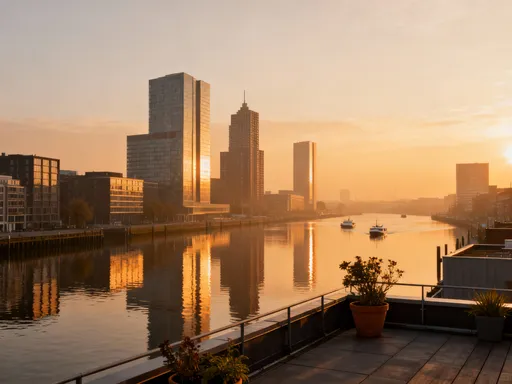
One of the most transformative ways to experience Rotterdam is from the water itself. While many visitors admire the city’s skyline from shore, those who step onto a boat discover a completely different dimension. At water level, reflections stretch across the dark surface of the Nieuwe Maas and Rijnhaven, turning skyscrapers into shimmering mirages. The interplay of light, motion, and architecture creates a living canvas that shifts with every ripple and passing vessel. Being on the water doesn’t just change your view—it changes your relationship with the city, offering a sense of intimacy and immersion that ground-level sightseeing cannot match.
Several local operators provide small-group boat tours using electric shuttles, ensuring a quiet, eco-friendly journey through the heart of the city. These vessels glide smoothly beneath towering bridges and alongside futuristic buildings, allowing passengers to absorb the scale and detail of structures like the Erasmus Bridge and the Maastoren without the distraction of engine noise. Unlike larger tourist ferries, these intimate tours often include commentary from knowledgeable local guides who share stories about the city’s evolution, architectural milestones, and hidden details most overlook. The slow pace encourages mindfulness, giving travelers time to truly observe, photograph, and reflect.
For those seeking a more personal experience, self-guided electric boat rentals are also available, particularly in the summer months. These compact, easy-to-navigate boats allow families and small groups to explore at their own rhythm, docking briefly at waterside cafés or pausing to watch cargo ships pass through the port’s intricate network of channels. Whether joining a guided tour or piloting your own vessel, the water-level perspective reveals a Rotterdam that feels fluid, dynamic, and deeply connected to its maritime roots. It’s a reminder that this city was born from the water—and its most authentic views still lie upon it.
Hidden Rooftop Lookouts Only Locals Know
While mainstream observation decks like those at the Euromast offer sweeping panoramas, some of Rotterdam’s most rewarding views come from lesser-known rooftop spaces tucked into everyday buildings. These quiet retreats, favored by locals, provide a more personal and unfiltered encounter with the cityscape. One such gem is the rooftop garden at Het IndustrieHuis, a cultural center located near the Oude Haven. Accessible during opening hours, this green oasis rises above the historic harbor, offering a peaceful vantage point where modern towers frame centuries-old ship masts. Benches and native plants create a serene atmosphere, perfect for a midday pause or an early evening with a thermos of tea.
Another under-the-radar spot is the small terrace adjacent to the Witte Huis, Europe’s first skyscraper, completed in 1898. Though the building itself is a protected monument, the surrounding plaza includes a modest elevated platform that few tourists notice. From here, the contrast between old and new is striking—the white Art Nouveau façade stands in quiet dignity amid glass towers and angular contemporary designs. Visiting in the late afternoon rewards you with soft, golden light washing over the buildings, casting long shadows across the square. There’s no entrance fee, no ticket line, and no rush—just space to breathe and observe.
These local lookouts thrive on simplicity and accessibility. Unlike commercial observation decks, they don’t rely on gimmicks or timed entries. Instead, they reflect Rotterdam’s ethos of openness and practical beauty. For travelers, the key is timing: weekday mornings and early evenings tend to be the quietest. Bringing a light jacket, a notebook, or a camera enhances the experience, turning a simple visit into a moment of reflection. These rooftops aren’t just viewpoints—they’re invitations to slow down, connect with the city’s rhythm, and see it through the eyes of those who live here.
Architectural Gems That Transform with Light
Rotterdam’s architecture doesn’t just impress—it evolves. Many of the city’s most iconic structures reveal their full character only when light interacts with their surfaces, shifting dramatically from dawn to dusk. The Cube Houses (Kubuswoningen), for example, appear as playful geometric experiments in daylight, but under twilight or streetlamp glow, their angled windows create a mosaic of warm interior lights, turning each cube into a lantern. Designed by architect Piet Blom in the 1980s, these tilted yellow homes challenge conventional design and become even more captivating when shadows deepen and colors intensify.
The Markthal, a horseshoe-shaped market hall, offers one of the most breathtaking transformations. By day, its vast拱 ceiling—adorned with a colossal artwork called “Horn of Plenty”—displays vibrant fruits, flowers, and insects in vivid detail. Natural light floods through the glass roof, illuminating stalls of fresh produce, cheeses, and spices below. But after sunset, the interior becomes a luminous cave, with LED lighting enhancing the artwork’s colors and drawing visitors into a surreal, dreamlike atmosphere. The contrast between day and night is so pronounced that many locals recommend visiting twice—once for shopping, once simply to absorb the ambiance.
Even utilitarian structures are reimagined through illumination. The parking garage at Stadhuisplein, for instance, features a dynamic LED facade that cycles through abstract patterns and seasonal themes. What might seem mundane by day becomes a canvas for public art after dark. Similarly, the Depot Boijmans Van Beun, the world’s first publicly accessible art storage facility, reflects ambient city light with its mirrored exterior, appearing to dissolve into the sky at certain angles. For photographers and casual observers alike, timing is everything. Early morning light softens edges and minimizes glare, while golden hour enhances textures and colors. Nightfall, meanwhile, unveils a different Rotterdam—one where architecture doesn’t just stand, but performs.
How to Chase the Best Views Without the Crowds
One of the simplest ways to deepen your experience in Rotterdam is to avoid the peak hours when popular spots fill with tourists. Weekday mornings, particularly between 8:00 and 10:30 a.m., offer a quieter, more contemplative atmosphere. Bridges, promenades, and viewing platforms are often empty, allowing for uninterrupted photos and a more personal connection to the surroundings. Seasonal variations also play a role—spring and early autumn bring mild weather and fewer visitors compared to the busy summer months, while winter mornings, though cooler, offer crisp air and dramatic skies that enhance architectural details.
Weather, often seen as a travel inconvenience, can actually enhance visual experiences. A light fog rolling in from the Maas softens the skyline, giving buildings a mysterious, ethereal quality. Rainy days, far from being a setback, create reflective surfaces on streets and canals, doubling the impact of lights and colors. Even overcast skies can be an advantage, diffusing harsh sunlight and eliminating glare—ideal conditions for photography. Rather than rescheduling, consider embracing the elements as part of the journey.
Technology can also help optimize your viewing strategy. Several weather and lighting apps provide real-time updates on sunrise and sunset times, cloud cover, and golden hour duration. Some crowd-tracking tools, originally designed for museums and attractions, now include data for public spaces and observation points. Pairing these insights with a flexible itinerary allows you to move with the city’s rhythm rather than against it. For instance, if the Markthal is crowded, you might shift your route to a quieter canal walk and return later. Incorporating coffee breaks at neighborhood cafés—like those in the Witte de Withstraat or Lijnbaan area—not only provides rest but also lets you observe daily life, adding emotional depth to your visit. Slowing down doesn’t mean seeing less; it means seeing more clearly.
Connecting Views to Local Culture and Lifestyle
In Rotterdam, viewing the city is never a passive act—it’s woven into the fabric of everyday life. Public spaces are designed not just for transit, but for lingering, socializing, and creating memories. Along the Nieuwe Maas, it’s common to see cyclists pausing on bridges to watch the sunset, couples spreading blankets for a waterside picnic, or students sketching the skyline in notebooks. These moments of stillness and connection reveal a culture that values authenticity, creativity, and balance. The city’s open, unpretentious spirit encourages everyone to claim space and enjoy the view, not as spectators, but as participants.
Seasonal events further animate the waterfront. In summer, pop-up bars emerge along the Wilhelmina Pier, offering drinks and music with panoramic views of the port. Outdoor film screenings on floating platforms or repurposed docks draw families and friends, turning public spaces into open-air cinemas. These gatherings aren’t commercial spectacles—they’re community-driven, low-key celebrations of shared space and shared moments. Even the act of grabbing coffee or ice cream becomes part of the experience, with kiosks and mobile vendors positioned to maximize sightlines.
This integration of leisure and landscape reflects Rotterdam’s broader identity as a city of innovation and inclusivity. Public art installations, temporary exhibitions, and urban gardening projects often emerge in overlooked corners, inviting exploration and interaction. The result is a dynamic relationship between people and place—one where beauty is not just observed, but lived. For visitors, especially those who value meaningful experiences over checklist tourism, this cultural rhythm offers a deeper connection. You’re not just seeing Rotterdam—you’re feeling its pulse, joining its flow, and becoming part of its story, if only for a moment.
Putting It All Together: Designing Your Own Viewing Journey
With so many perspectives to explore, the key to a fulfilling visit is crafting a journey that aligns with your pace and curiosity. A suggested half-day route might begin at sunrise with a quiet electric boat tour along the Rijnhaven, where the first light gilds the glass facades of the Kop van Zuid district. From there, head to the rooftop garden at Het IndustrieHuis for a morning coffee and a panoramic view of the Oude Haven. The walk through the surrounding neighborhood offers glimpses of street art and historic vessels, grounding the experience in local history.
Next, make your way to the Cube Houses and the Markthal, allowing time to wander inside the market hall and absorb its vibrant energy. Visit early enough to avoid crowds and catch the natural light filtering through the拱 ceiling. A short walk leads to the Witte Huis terrace, where a few quiet minutes can provide a reflective pause before continuing along the Maas promenade. If time allows, include a stop at the Depot Boijmans Van Beun, whose mirrored exterior changes with the sky and surroundings.
As afternoon turns to evening, follow the canal paths toward Wilhelmina Pier, where golden hour paints the port in warm hues. This is an ideal time for photography, people-watching, or simply sitting on a bench to absorb the scene. The day doesn’t need a grand finale—just a mindful conclusion. What matters most is not how many sights you’ve seen, but how deeply you’ve engaged with them. Rotterdam rewards those who wander with intention, who pause to notice reflections in water, light on glass, or the quiet hum of daily life along the quay.
This city doesn’t reveal itself all at once. Its beauty unfolds gradually, in layers—through movement, stillness, and repeated glances. By stepping off the beaten path, embracing off-peak moments, and connecting views to the rhythms of local life, you craft not just an itinerary, but a personal narrative. Rotterdam invites you to look beyond the obvious, to discover hidden decks and quiet rooftops, to float between bridges and boats, and to find wonder not in perfection, but in possibility. For the curious traveler, especially those who seek authenticity and quiet inspiration, the waterfront holds more than sights—it holds stories waiting to be felt.