You Won’t Believe This Underground Dining Scene in Budapest
Budapest isn’t just about thermal baths and ruin bars—its food scene is having a serious glow-up. I stumbled upon something wild: secret supper clubs, candlelit vaults, and chefs cooking in abandoned cellars. This city’s specialty dining is going viral for a reason. Think bold flavors, unexpected locations, and zero pretension. If you’re still only coming for the goulash, you’re missing half the story. Let me show you the underground wave turning dinner into an adventure.
The Rise of Budapest’s Hidden Food Culture
Over the past few years, Budapest has quietly transformed into one of Europe’s most exciting culinary destinations—not because of Michelin stars, but because of a grassroots movement led by passionate local chefs and food lovers. The shift began in the wake of the global pandemic, when traditional restaurant models faltered and creatives sought new ways to connect with audiences. With dining rooms closed and tourism at a standstill, many turned inward—literally—transforming forgotten cellars, disused warehouses, and private apartments into intimate supper clubs. These weren’t just temporary fixes; they evolved into a lasting cultural phenomenon rooted in community, creativity, and authenticity.
What set this movement apart was its rejection of formality. Instead of white tablecloths and sommeliers, guests found themselves seated on mismatched chairs around long wooden tables, served dishes that felt deeply personal. Many of these spaces emerged from the city’s already vibrant ruin bar culture, where abandoned buildings in the Jewish Quarter were repurposed into eclectic nightlife hubs. That same spirit of adaptive reuse—finding beauty in decay and opportunity in neglect—now extends to dining. Young chefs, often trained abroad but eager to reconnect with their roots, began experimenting with traditional Hungarian ingredients in unexpected ways, serving them in spaces that told a story beyond the menu.
Social media played a pivotal role in amplifying this underground scene. A single Instagram post of a candlelit meal in a centuries-old vault, with steam rising from a clay pot of paprikás csirke, could spark international curiosity. Unlike mainstream restaurants that rely on guidebooks and ads, these hidden kitchens thrived on word-of-mouth and digital discovery. The sense of exclusivity—knowing you were dining somewhere most tourists would never find—added to the allure. Yet, despite their growing fame, these venues maintained a refreshing lack of pretension. The focus remained on connection: between people, place, and plate.
What Makes Specialty Dining in Budapest Different?
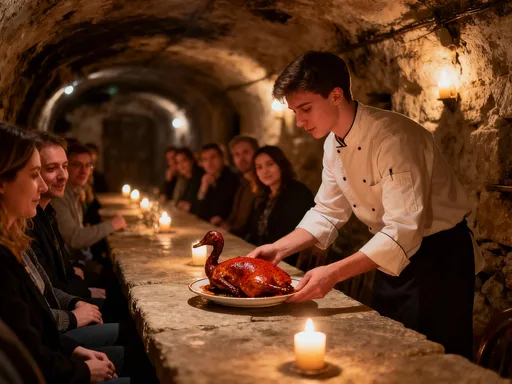
Specialty dining in Budapest isn’t about luxury or celebrity chefs. It’s about immersion. Unlike conventional restaurants where the meal is the centerpiece, here, the entire experience becomes the main course. Imagine descending a narrow stone staircase into a 19th-century cellar, where the air is cool and the only light comes from flickering candles on rough-hewn tables. A chef moves among guests, explaining how the sourdough bread was made with heirloom wheat milled by hand. The first course arrives—smoked goose liver with wild berry compote—served on vintage porcelain. This is not fine dining; it’s storytelling through food, setting, and hospitality.
What defines these spaces is their intentional imperfection. There are no laminated menus or digital ordering systems. Reservations are often made via direct message or email, and seating is limited—sometimes to just ten guests per night. The venues themselves are carefully chosen for their atmosphere: a former printing studio with exposed brick walls, a courtyard garden hidden behind a nondescript door, or a basement that once stored wine for a noble family. These locations aren’t just backdrops; they’re integral to the experience, evoking a sense of time and place that no modern restaurant design could replicate.
Authenticity is the cornerstone. While tourist-heavy restaurants in central areas may serve passable goulash or lángos to satisfy expectations, these underground kitchens aim to surprise and educate. Dishes are rooted in Hungarian tradition but reimagined with seasonal ingredients and modern techniques. A classic fisherman’s soup might be deconstructed into a silky bisque with river herbs foraged from the Danube banks. The chef often shares the story behind each dish—whose grandmother’s recipe inspired it, or how a nearly forgotten ingredient was revived. This level of engagement transforms eating into an act of cultural exchange, where every bite carries meaning.
Top Experiences That Went Viral (Without Naming Fictional Spots)
One of the most talked-about experiences in recent years is the intimate chef’s table set within a restored historic building. These multi-course dinners unfold in real time, with guests seated at a counter overlooking an open kitchen. The chef moves deliberately, plating each dish with care while narrating its inspiration. The atmosphere is hushed yet warm, with soft lighting and the occasional clink of wine glasses. Diners often describe the meal as a performance—cooking as theater, where the ingredients are the stars. A standout moment might be the arrival of duck breast, roasted slowly over cherry wood and served with a reduction made from Tokaji wine, Hungary’s famed dessert wine. The aroma fills the room, mingling with the scent of beeswax candles.
Another viral sensation has been the seasonal pop-up dinner, often hosted in unconventional spaces like art galleries or abandoned theaters. These events are transient by design, appearing for only a few nights before vanishing until the next season. One summer, a collective of chefs created a menu inspired by the Great Hungarian Plain, featuring grilled carp from local rivers, pickled vegetables from family gardens, and desserts made with apricots grown in the countryside. The theme extended to the decor: wildflowers in mason jars, linen napkins dyed with onion skins, and live folk musicians playing traditional tunes on violin and cimbalom. Social media buzz exploded when attendees shared videos of the open-air dining setup, with string lights glowing above a cobblestone courtyard as laughter echoed into the night.
Perhaps the most emotionally resonant experience is the long-table dinner in a hidden courtyard. These gatherings emphasize community, bringing together locals and travelers for a shared meal under the stars. The menu is often family-style, encouraging guests to pass platters of roasted root vegetables, stuffed cabbage, and fresh bread. There’s a sense of spontaneity—someone might bring a guitar, or a grandmother might share a story in halting English that still manages to convey warmth. These dinners don’t just go viral because they look beautiful; they resonate because they feel human. In an age of curated online personas, they offer something rare: genuine connection.
How to Find These Places (Even If You Don’t Speak Hungarian)
Discovering these hidden dining experiences doesn’t require fluency in Hungarian or insider connections, but it does require curiosity and a willingness to step off the beaten path. The first step is tuning into local food collectives on Instagram. Many of these underground kitchens don’t have formal websites or online booking systems, but they maintain active social media profiles where they announce upcoming events. Searching hashtags like #budapestfoodscene, #undergrounddining, or #hungariancuisine can lead to authentic accounts run by chefs or food curators. Following a few key influencers who specialize in Central European gastronomy can also provide timely updates.
Another reliable method is joining a small-group culinary tour led by a local guide. These tours, often limited to eight to ten participants, are designed specifically to introduce visitors to the city’s lesser-known food culture. A knowledgeable guide can navigate language barriers, secure reservations, and provide context about the dishes and traditions being experienced. Some tours even include behind-the-scenes access, such as a visit to a market where chefs source their ingredients or a stop at a family-run farm on the outskirts of the city. These experiences not only make discovery easier but also deepen understanding of the food’s origins.
Technology also plays a helpful role. Google Translate’s camera function allows travelers to scan handwritten menus or event flyers in real time, making it easier to understand offerings and pricing. Many venues now accept international payments via PayPal or Stripe, removing another barrier for foreign guests. Timing can be crucial—visiting during events like the Budapest Wine & Dine Festival or the Taste of Budapest fair increases the chances of encountering pop-ups and special collaborations. Above all, flexibility is key. Unlike traditional restaurants with fixed hours, these underground kitchens operate on their own schedules. Being open to last-minute invitations or adjusting plans at short notice often leads to the most memorable experiences.
The Role of Local Chefs and Food Innovators
At the heart of Budapest’s underground dining renaissance are a new generation of chefs who are both preservationists and pioneers. Trained in classical techniques but deeply connected to their heritage, they are rediscovering forgotten elements of Hungarian cuisine and reintroducing them with modern sensibility. These chefs aren’t chasing global fame; they’re driven by a desire to honor their ancestors while making food that feels relevant today. Many have spent time working in top kitchens abroad—Paris, Copenhagen, London—but chose to return home, inspired by the richness of local ingredients and the untold stories embedded in traditional recipes.
One of their defining traits is a commitment to hyper-local sourcing. Instead of importing truffles or exotic spices, they look to Hungary’s diverse landscapes: the fertile plains of the Great Alföld, the volcanic hills of the north, the wetlands along the Tisza River. They collaborate with small-scale farmers, foragers, and artisans to access ingredients like ancient grains (such as spelt and emmer), heirloom vegetables, and free-range poultry. Some even grow their own herbs and vegetables in rooftop gardens or community plots. This farm-to-table ethos isn’t a marketing gimmick—it’s a necessity, ensuring freshness and sustainability while supporting local economies.
Equally important is their respect for culinary lineage. Many chefs incorporate family recipes into their menus, sometimes adapting them with contemporary techniques. A grandmother’s method of fermenting cabbage might inspire a kimchi-style side dish using caraway and juniper. A great-uncle’s method of curing pork could inform a charcuterie board featuring smoked sausages with wild garlic. These personal touches transform meals into acts of remembrance, where every dish carries a whisper of the past. By sharing these stories with guests, chefs create a deeper emotional resonance, turning dinner into something more than sustenance—it becomes memory, identity, and legacy.
Balancing Authenticity and Commercialization
As Budapest’s underground dining scene gains international attention, a critical question emerges: how can these intimate, community-driven spaces maintain their authenticity in the face of growing demand? The risk of over-tourism is real. What began as a modest gathering of friends and food lovers can quickly become a bucket-list item for influencers and cruise ship passengers. Some venues have already faced pressure to expand, professionalize, or compromise their values to accommodate larger crowds. The charm of a candlelit cellar dinner lies in its scarcity and intimacy—once those are lost, the experience risks becoming just another themed restaurant.
Yet, many operators are finding thoughtful ways to scale without selling out. Some limit reservations to a small number of guests per night, ensuring that each meal remains personal. Others adopt a rotating model, hosting dinners in different locations each month to prevent any single space from becoming too commercialized. A few have partnered with cultural institutions or art collectives to maintain a nonprofit ethos, using proceeds to fund food education programs or support young chefs. Transparency is key—guests are often informed in advance that they’re participating in a low-profit, high-effort endeavor, which fosters appreciation and respect.
Travelers also have a responsibility to engage mindfully. This means arriving with an open mind, not expecting five-star service or predictable menus. It means tipping fairly, speaking politely (even with limited language), and avoiding loud or disruptive behavior that disrupts the atmosphere. It means resisting the urge to photograph every course and instead being present in the moment. These spaces thrive on trust and mutual respect; when guests treat them as sacred rather than sensational, the culture can endure. The goal isn’t to keep them secret forever, but to ensure they evolve in a way that honors their origins.
Why This Trend Matters Beyond the Plate
The rise of underground dining in Budapest represents more than a culinary trend—it reflects a broader shift in how people want to travel and connect. In an era of mass tourism, where landmarks are overcrowded and experiences often feel generic, travelers are increasingly seeking moments of depth and meaning. They don’t just want to see a place; they want to feel it. Specialty dining offers exactly that: a chance to sit at a table with strangers, share stories over homemade pálinka, and taste food that tells the story of a nation. It’s tourism at its most human.
These experiences also promote sustainable and ethical travel. By supporting small, independent operators, visitors contribute directly to local communities rather than multinational chains. The emphasis on seasonal, locally sourced ingredients reduces environmental impact and celebrates regional biodiversity. Moreover, the intimate format encourages slower, more intentional travel—staying longer, listening more, and learning from those who call the city home. In this way, a single meal can become a bridge between cultures, fostering empathy and understanding in a fragmented world.
Dinner, after all, has always been more than nourishment. It’s a ritual, a gathering, a moment of pause in the rush of daily life. In Budapest’s hidden kitchens, that ritual is being reclaimed—not as performance, but as presence. So the next time you plan a trip, consider looking beyond the guidebook. Seek out the cellar with no sign, the courtyard with a single lantern, the chef who greets you like an old friend. Because the best stories aren’t found in brochures. They’re shared over a table, one unforgettable bite at a time.