You Won’t Believe What I Found on Namibia’s Forbidden Coast
Have you ever stood where the desert meets the sea and felt like the world stood still? That’s exactly what happened when I set foot on Namibia’s Skeleton Coast. This remote stretch isn’t just about shipwrecks and bones—it’s alive with stories, culture, and unexpected human warmth. From ancient Himba traditions to the resilience of coastal foragers, I discovered a side of travel that goes way beyond scenery. This is real, raw, and deeply moving.
First Glimpse: Arriving at the Edge of the World
Reaching the Skeleton Coast is an adventure in itself—a journey that begins with a flight into Namibia’s capital, Windhoek, followed by a series of small charter planes and rugged 4x4 drives across vast, sun-scorched plains. As the coastline nears, the landscape transforms in ways that feel almost otherworldly. Towering red dunes spill directly into the cold Atlantic Ocean, their edges blurred by a perpetual veil of coastal fog. The air grows thick with salt and silence, broken only by the distant cry of a kelp gull or the soft crunch of gravel underfoot. It’s a place where time slows, and the mind begins to recalibrate to a deeper rhythm.
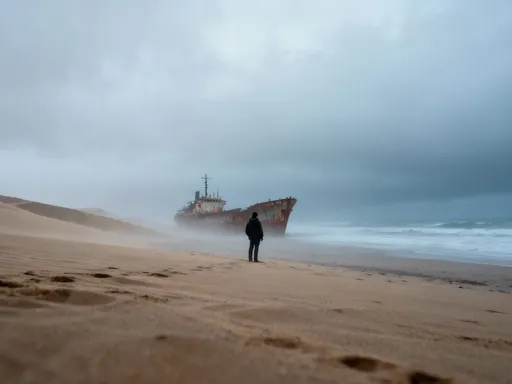
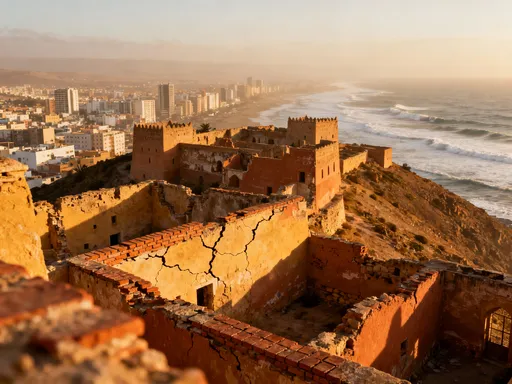
The first sight of a rusted shipwreck jutting from the sand, half-buried like a fossil, sends a shiver through even the most seasoned traveler. These skeletal remains—ghosts of 19th and early 20th-century vessels lured to disaster by false horizons and hidden reefs—are not just dramatic scenery. They are silent witnesses to a history of hardship, ambition, and the unforgiving power of nature. The name 'Skeleton Coast' is no exaggeration: it reflects both the whale and seal bones once scattered along the shore and the human lives lost to its treacherous waters. Yet today, these wrecks are framed not by death, but by resilience—the survival of those who have lived alongside them for generations.
Access to this region is deliberately limited. Large portions of the coast fall within the boundaries of the Skeleton Coast National Park and the adjacent Namib Sand Sea, a UNESCO World Heritage Site. Permits are required, and tourism is carefully managed to protect both the fragile ecosystem and the cultural integrity of local communities. This controlled access has preserved the area’s mystery, preventing mass tourism and keeping the landscape largely unchanged. For visitors, this means an experience that feels authentic and unscripted—a rare gift in an age of curated travel.
The People of the Coast: Life in Extremes
Life along the Skeleton Coast is not for the faint of heart. The environment is one of the harshest on Earth—arid, isolated, and subject to extreme temperature shifts between day and night. Yet, in small settlements scattered along the northern reaches of the coast, people have carved out a way of life that speaks to extraordinary adaptability. Many are descendants of indigenous pastoralists, coastal foragers, and mixed-heritage families who have lived in this region for centuries. Their existence is defined by resourcefulness, deep knowledge of the land, and a quiet dignity that comes from enduring what others might consider unbearable.
Water is the most precious commodity. Rainfall is scarce, sometimes going years between significant events. Communities rely on fog catchers—simple mesh nets that collect moisture from the ocean mist—or on deep boreholes that tap into ancient underground aquifers. Every drop is conserved. Food comes from a combination of small-scale livestock herding, gathering edible plants, and seasonal fishing. Solar panels power basic lighting and communication, but modern conveniences are minimal. There are no supermarkets, no traffic lights, and no rush. Life unfolds at the pace of nature.
What stands out most is not the hardship, but the richness of culture that thrives within it. Despite physical isolation, these communities maintain strong social bonds. Elders pass down knowledge through storytelling, teaching younger generations how to read animal tracks, predict weather patterns, and identify medicinal plants. Children learn by doing—herding goats, mending nets, or grinding wild grains. There is no formal curriculum, yet the education is profound. This intergenerational transmission of wisdom ensures that traditions survive, not as museum pieces, but as living, breathing practices.
Cultural Encounters: More Than Just Sightseeing
One of the most transformative moments of my journey came during a visit to a semi-nomadic family living near the Hoanib River. Invited to sit by the fire as the sun dipped below the dunes, I was welcomed not as a tourist, but as a guest. The family shared a simple meal of roasted goat and boiled sorghum, served on handmade clay plates. There was no fanfare, no performance—just genuine hospitality rooted in a deep sense of community. In that quiet circle of firelight, I felt a connection that transcended language and culture.
As night fell, the elders began to sing—low, resonant melodies that seemed to rise from the earth itself. The songs told of ancestors, migrations, and the changing seasons. Children joined in, their voices weaving through the older tones like threads in a tapestry. One woman demonstrated a traditional dance, her feet moving in precise patterns over the sand, her copper bracelets chiming with each step. It was not staged for entertainment; it was a living expression of identity, shared freely but not for sale.
The family also showed me their crafts—beaded jewelry made from seeds and recycled glass, woven baskets from reeds gathered near seasonal rivers, and leather pouches dyed with natural pigments. Each item carried meaning: colors symbolized elements of nature, patterns told family stories, and materials were chosen with care to avoid waste. Participating in the making of a simple bracelet, I realized how every action in this culture is intentional. There is no excess, no disposability—only purpose and respect for what the land provides.
The Himba and the Sea: A Surprising Cultural Link
While the Himba people are traditionally associated with the arid plains of northern Namibia, their cultural reach extends in ways that surprise many outsiders. During certain seasons, Himba families undertake long migrations in search of pasture and water, some venturing within days’ walk of the Atlantic coast. Though they do not live by the sea year-round, their spiritual relationship with the land includes the shoreline as a sacred boundary between worlds.
Among the Himba, the ocean is not just a physical space but a place of ritual significance. Elders speak of it as a gateway to the ancestors, where prayers are carried by the wind and waves. Before embarking on long journeys, some Himba perform blessings near the coast, casting small offerings—grains, beads, or tufts of hair—into the surf as a sign of respect and protection. These rituals are not widely publicized, nor are they performed for visitors, but those privileged to witness them describe a profound sense of reverence.
While the Himba are not fishermen by tradition, their knowledge of natural cycles aligns closely with coastal rhythms. They observe tidal patterns and lunar phases not for fishing, but for determining the best times to move herds or conduct ceremonies. This deep attunement to nature reveals a worldview in which all elements—desert, river, mountain, and sea—are interconnected. The coast, in this sense, is not an edge but a threshold—a place where the physical and spiritual converge.
Survival Wisdom: Ancient Practices Still Alive Today
Along the Skeleton Coast, survival is not a matter of technology or convenience, but of knowledge passed down through countless generations. One of the most remarkable examples is traditional fishing, which relies not on modern gear, but on an intimate understanding of tides, currents, and marine behavior. Local fishers use handwoven traps made from reeds and wire, placed in tidal pools or shallow channels where fish are naturally funneled. These traps are checked at dawn, ensuring minimal waste and only what is needed is taken.
Equally impressive is the use of native plants for food and medicine. The !Nara melon, a spiky fruit that thrives in the dunes, provides both hydration and nutrition during dry months. Its seeds are roasted and ground into flour, a practice that has sustained communities through droughts. Another plant, the Commiphora wildii, is used to treat respiratory ailments, while the resin of the myrrh bush serves as a natural antiseptic. These remedies are not experimental—they are trusted, time-tested solutions used with confidence by healers who inherit their knowledge from elders.
What makes these practices truly sustainable is their built-in balance. There is no concept of 'maximum yield' or 'resource extraction.' Instead, every action follows the principle of taking only what is needed and giving back when possible. For example, when harvesting !Nara melons, families leave some behind to regenerate the plant. When fishing, they avoid breeding seasons and protect juvenile fish. These customs are not enforced by law, but by cultural values that prioritize long-term survival over short-term gain. In an era of environmental crisis, such wisdom is not just admirable—it is essential.
Preserving Culture in a Changing World
Despite their resilience, the communities of the Skeleton Coast face growing challenges. Climate change has intensified droughts and shifted weather patterns, making traditional herding and farming more difficult. Rising sea temperatures affect fish populations, threatening a vital food source. At the same time, younger generations are increasingly drawn to urban centers like Windhoek and Swakopmund, where education and employment opportunities seem more promising. This migration risks breaking the chain of cultural transmission, as elders find fewer willing listeners for their stories and teachings.
Yet, there is hope. Across the region, community-led initiatives are working to preserve language, dress, and customs. In some villages, elders have begun hosting weekly storytelling sessions for children, supported by local schools and NGOs. Women’s cooperatives are revitalizing traditional crafts, selling beaded jewelry and woven goods through fair-trade networks that ensure fair wages and cultural respect. These efforts are not about freezing culture in time, but about empowering communities to adapt without losing their identity.
One particularly inspiring project involves a mobile cultural archive—a solar-powered van equipped with recording equipment that travels from settlement to settlement, documenting songs, oral histories, and healing practices. The recordings are stored locally and shared only with community consent, ensuring that knowledge remains in the hands of those who created it. Such initiatives recognize that preservation is not about display, but about continuity—about ensuring that future generations can inherit not just objects, but living traditions.
How to Visit Right: Respect, Not Disruption
For those drawn to the Skeleton Coast, the question is not just *can* you go, but *how* you should go. This is not a destination for checklist tourism or Instagram chasing. It is a place that demands humility, patience, and a willingness to listen. The most important step is to travel with certified local guides—individuals who are not just knowledgeable, but who have a direct connection to the communities you’ll encounter. These guides ensure that visits are conducted with permission and cultural sensitivity, and that a portion of tourism income stays within the region.
Photography, while tempting, must be approached with care. Never point a camera at people, sacred sites, or ceremonies without explicit consent. In many cultures, images are believed to carry spiritual essence, and capturing them without permission is seen as disrespectful. Instead, focus on landscapes, textures, and moments of quiet beauty. Better yet, put the camera down and simply be present. The most lasting memories are often the ones you carry in your heart, not on a memory card.
Small-group tours that emphasize cultural exchange over spectacle are the most ethical choice. Look for operators that partner with community cooperatives, contribute to local conservation efforts, and limit group sizes to reduce environmental impact. Avoid luxury lodges that isolate visitors from local life; instead, consider homestays or eco-camps that foster genuine interaction. Remember, the goal is not to observe culture as a spectacle, but to engage with it as a guest—one who leaves no trace, takes only memories, and gives back through respect and responsibility.
Conclusion
The Skeleton Coast isn’t just a destination; it’s a lesson in resilience, identity, and human connection. Beyond the bones and fog lies a living culture that deserves not just attention, but deep respect. It is a place where the land shapes the people, and the people, in turn, honor the land through every choice they make. Their way of life is not primitive—it is profoundly wise, rooted in balance, sustainability, and a deep understanding of interdependence.
By choosing mindful travel, we don’t just witness traditions—we help protect them. Every respectful interaction, every fair payment, every moment of quiet listening contributes to a model of tourism that uplifts rather than exploits. In a world where so much is fleeting, the Skeleton Coast reminds us that some things endure: the strength of community, the power of tradition, and the quiet dignity of those who live in harmony with the earth.
So next time you dream of the wild edge, ask yourself: are you ready to listen? Not to speak over, not to capture, not to conquer—but to learn. Because in the silence between the dunes and the sea, there is a voice worth hearing. And it’s been speaking for centuries.